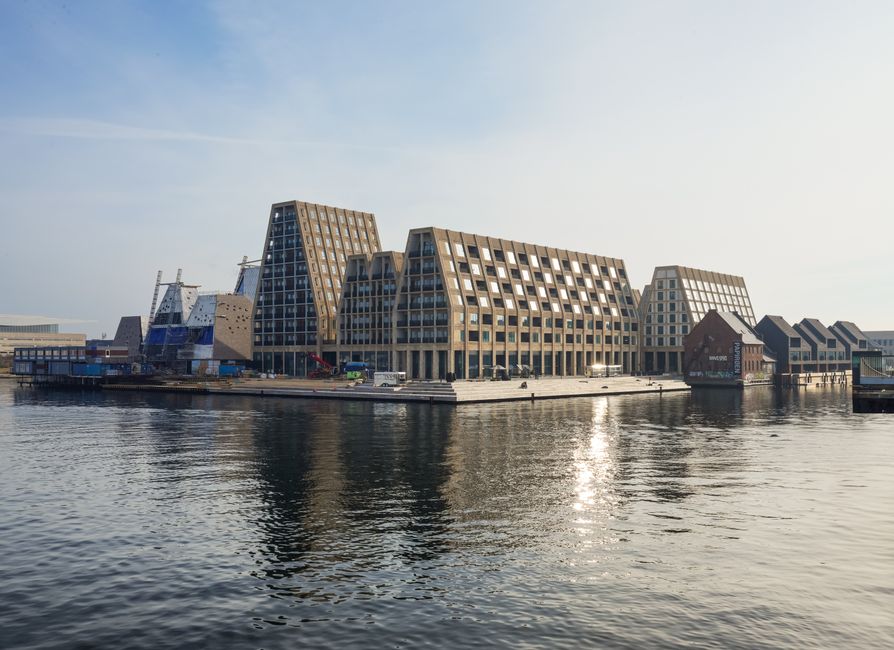
Copenhagen’s Technical and Environmental Administration has approved the release of 22 new residential land plots in Nordhavn and Ørestad Syd. The city-owned development corporation By & Havn will begin accepting proposals on August 1st for projects that prioritize community-led housing and aggressive sustainability standards, marking a significant shift away from large-scale developer-led projects.
The move comes as demand for secure, self-sufficient housing intensifies across Europe. Lingering supply chain disruptions from the war in Ukraine and growing anxiety over energy security, underscored by recent gas shortages in Russia, are pushing Danes to seek more control over their immediate living environment. This, combined with last summer’s deadly heatwaves in southern Europe, has created a powerful incentive for building homes that are not only energy-efficient but also foster strong neighbourhood connections.
A New Priority: Climate Resilience and Community
The city's planning documents for this release explicitly link the plots to Copenhagen's broader goals of becoming a carbon-neutral capital. The newly available land, located near the Orientkaj metro station in Nordhavn and along Asger Jorns Allé in Ørestad, is not being offered to the highest bidder. Instead, a points-based system will favour applications from building groups (byggegrupper) and established co-housing associations (bofællesskaber).
This initiative builds on the principles of the city's "Fællesskab København" strategy, which aims to combat loneliness and create more integrated neighbourhoods. Proposals will be judged heavily on their communal aspects. Plans showing shared workshops, extensive kitchen gardens, or multi-purpose rooms for residents will score higher than those focused solely on private family units. Indicative prices for the plots, which range from 400 to 1,200 square metres, begin at 6.5 million DKK, but the final allocation will weigh the project's social and environmental value alongside the financial offer. The goal is to seed these developing districts with resilient, tight-knit communities from the ground up.
Navigating the Application Process
Prospective applicants face a detailed and competitive process. The criteria are stringent. All proposals must demonstrate a clear path to achieving DGNB Gold sustainability certification, a standard that evaluates a building’s entire life cycle, from materials sourcing to end-of-life recycling. The use of low-carbon materials like cross-laminated timber (CLT) is strongly encouraged, as are designs that incorporate green roofs and sophisticated rainwater capture systems to mitigate the kind of flash flooding that has recently plagued other parts of Northern Europe.
Groups interested in applying must first form a legal entity, typically an andelsboligforening. A complete application package will require preliminary architectural drawings, a detailed financial plan, and a 'community charter' outlining how the co-housing group will operate and manage shared spaces. By & Havn has scheduled two public information sessions at the BLOX hub on the harbourfront for the last week of July to guide potential applicants through the complex requirements. The first-round deadline for submitting a formal expression of interest is October 31, 2026, via the official planning portal on the By & Havn website.