Technology
Copenhagen's Tech Scene Attracts Record Venture Capital Investment
From Frederiksberg incubators to Ørestad data centres, the Danish capital's startup ecosystem is drawing record venture capital and reshaping the city's economy in real time.
How we reported this
Copenhagen's startup sector closed the first half of 2026 with roughly 1.4 billion euros in venture capital raised across Danish tech companies, according to figures compiled by the Danish Venture Capital and Private Equity Association, putting the country on track for its strongest full-year funding total since records began. The bulk of that activity is concentrated within a 10-kilometre radius of Rådhuspladsen, and it shows no signs of slowing.
The timing matters. Europe's broader investment climate has been uneven this year, squeezed between persistent inflation in southern markets and geopolitical uncertainty following the death of Iran's supreme leader and the resulting instability in energy markets. Against that backdrop, Copenhagen's relative political stability, its pipeline of engineering graduates from the Technical University of Denmark in Kongens Lyngby, and its deepening fibre and 5G infrastructure have made it a genuine safe harbour for risk capital looking for a foothold on the continent.
The Neighbourhoods Where It's Actually Happening
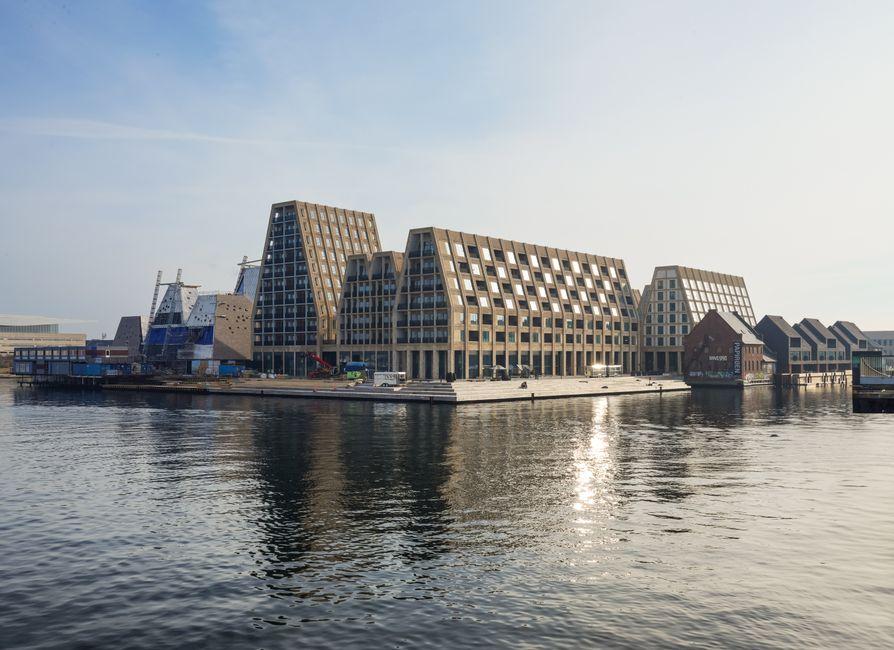
The Meatpacking District, Kødbyen, has long traded on its creative-industry reputation, but the tech migration there is accelerating. At least a dozen early-stage startups have taken desks at BLOX, the Rem Koolhaas-designed complex on the harbour front at Bryghuspladsen, since January alone. The building houses the Danish Architecture Centre on its public floors, but its upper co-working levels have become a de facto recruiting ground, with companies in climate tech, health data and logistics software sharing walls and, increasingly, hires.
Further south, the Ørestad district, the modernist quarter that straddles the metro's M1 line between the city centre and Copenhagen Airport, is adding capacity fast. Two new hyperscale data centre projects are under construction near the DR Byen media campus, with combined investment of around 900 million euros. One is a European expansion by a US cloud provider, the other a domestic build-out by GreenDC, a Copenhagen-based operator that runs its servers partly on waste heat piped back into the district heating grid. That second project, scheduled to come online in the third quarter of 2027, has attracted particular attention from sustainability-focused investors.
The Copenhagen Fintech hub on Finanstorvet, in the old Børsen neighbourhood near Christiansborg, remains the anchor institution for the payments and banking-technology cluster. It now lists 183 member companies, up from 141 at the same point last year. The hub has been running a dedicated programme since March 2026 matching Nordic fintechs with institutional partners in Germany and Poland, partly in response to new EU open-banking mandates that take full effect in January 2027.
Where the Pressure Points Are
Office rents in Frederiksberg and the Inner City have climbed steeply. Prime co-working desks in the Nansensgade corridor now run between 3,200 and 4,800 kroner per month depending on amenities, up roughly 18 percent from mid-2024. That squeeze is pushing younger, pre-seed companies toward Valby and Sydhavn, two western neighbourhoods where the municipality has been actively converting former industrial plots into affordable innovation space since 2023.
Talent remains the sharper constraint. Danish universities produced around 5,400 engineering and computer science graduates in 2025, a figure that has grown year on year but still falls short of what the local industry says it needs. Several larger companies, including logistics software firm Milestone Systems, headquartered in Brøndby, have opened graduate recruitment offices in Warsaw and Lisbon to supplement Copenhagen hiring.
The next inflection point for the ecosystem is Copenhagen Tech Festival, running September 8-12 along the waterfront between Nørreport and Kongens Nytorv. The event drew 34,000 attendees last year and is expected to exceed 40,000 this time, with a program that includes a dedicated AI-in-climate-tech track co-organised with the University of Copenhagen's computer science faculty. Founders looking for institutional introductions, and investors scouting Series A targets, are already treating the week as the practical start of the autumn deal season. Miss it, and you've missed the room.