Wellness
Gut health 101: fermented foods you can find locally
From Nørrebro market stalls to Vesterbro delis, Copenhagen's fermented food scene gives your microbiome exactly what the science now says it needs.
4 min read
Wellness
From Nørrebro market stalls to Vesterbro delis, Copenhagen's fermented food scene gives your microbiome exactly what the science now says it needs.
4 min read
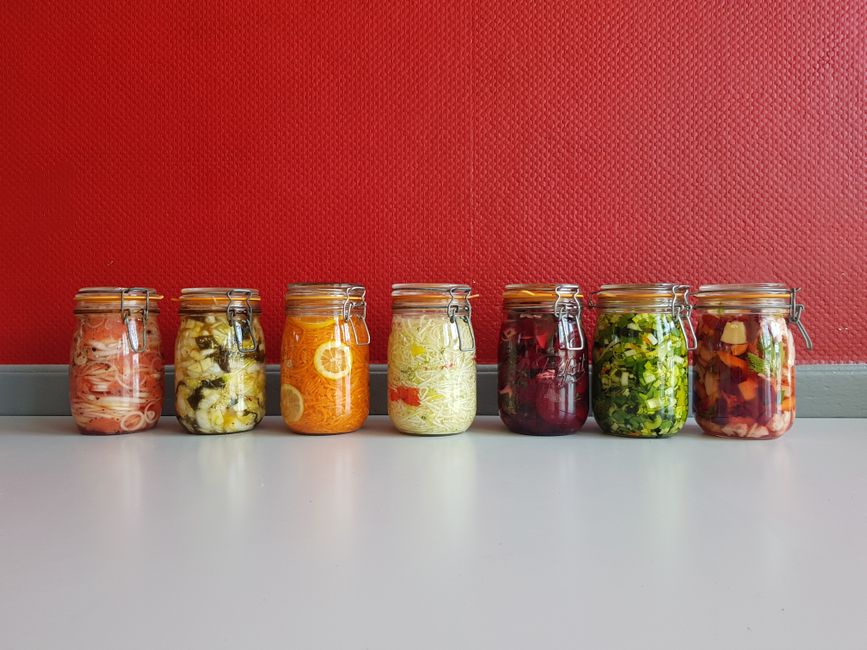
Denmark's relationship with fermented food is older than the country itself. But interest in the gut-health benefits of lacto-fermented vegetables, live-culture dairy and probiotic drinks has surged sharply this year, with Copenhagen's health food retailers reporting that sales of kombucha and raw sauerkraut rose roughly 30 percent between January and May 2026 compared with the same period in 2025. The microbiome is having a mainstream moment, and the city is well stocked to meet the demand.
The timing is not accidental. Researchers at the University of Copenhagen's Department of Nutrition, Exercise and Sports published findings in early 2026 confirming what smaller studies had suggested for years: regularly eating two or more servings of fermented foods per day is associated with measurably greater gut microbial diversity in healthy adults. Higher microbial diversity, in turn, is linked to reduced systemic inflammation and stronger immune response. For a city that already cycles to work, prioritises sleep hygiene and queues calmly at the farmer's market, fermentation is simply the next logical step in an already active wellness culture.
Torvehallerne, the glass-and-steel covered market at Israels Plads, remains the single most convenient starting point. Stall 17, run by the small-batch producer Grød's fermentation side-project, stocks rotating jars of kimchi, lacto-fermented red cabbage and carrot-and-ginger kraut, all unpasteurised and priced between 65 and 95 kroner per 400-gram jar. Unpasteurised matters: heat-treated sauerkraut found on most supermarket shelves has had the live lactobacillus cultures killed off, which eliminates most of the gut benefit.
Over in Nørrebro, Hallernes Mad og Marked on Nørrebrogade has built a quiet reputation among nutritionists working with the city's public health centres. The market's resident Korean-Danish vendor carries three varieties of house-made kimchi fermented for a minimum of 72 hours before sale. A 300-gram portion costs 70 kroner. Staff there can advise on introducing fermented foods gradually — a sensible approach for anyone whose current diet is low in fibre, since jumping in with large portions can cause temporary bloating as the gut flora adjusts.
For dairy-based options, Meyers Bageri — with locations in Jægersborggade in Nørrebro and on Gammel Kongevej in Frederiksberg — sells skyr and cultured buttermilk sourced from two organic farms in Jutland. Skyr contains Lactobacillus acidophilus and Bifidobacterium strains and has been a staple of Scandinavian diets for over a thousand years. A 500-gram pot retails for around 42 kroner. Kefir, which contains a broader spectrum of microbial strains than standard yoghurt, is available at Irma supermarket branches across the city; the Naturli brand version has been stocked continuously since March 2025.
The fizzy ferment getting the most shelf space right now is kombucha. Copenhagen-based brewer Sipp Kombucha, founded in 2019 and now distributed through more than 80 cafés and shops in the capital, produces a ginger-lemon variety with around 2 billion CFUs (colony-forming units) per 330-millilitre bottle. A single bottle costs 38 kroner at most independent grocers in Vesterbro and on Frederiksberg Allé. CFU counts are not the sole indicator of quality, but anything under 1 billion per serving provides limited measurable gut benefit, according to guidelines published by the European Food Safety Authority.
Miso, less familiar on Danish tables but increasingly stocked at Naturli's flagship shop on Fiolstræde in the city centre, offers another fermented option. A 200-gram jar of unpasteurised white shiro miso from the Danish importer NordMiso retails for 58 kroner and can be stirred into dressings, soups or marinades. The key, as with all these products, is to avoid cooking it above 70 degrees Celsius, which damages the live cultures.
The practical advice from dietitians affiliated with the Frederiksberg Hospital outpatient nutrition clinic is straightforward: start with one small serving daily — a tablespoon of sauerkraut alongside lunch, or a 150-millilitre glass of kefir at breakfast — and build over two to three weeks. Pair fermented foods with fibre-rich vegetables to feed the new bacterial strains you are introducing. And read the label: if the jar says pasteurised, or if the kombucha lists added probiotics rather than naturally occurring cultures, you are paying for marketing rather than microbes.
About this article
Published by The Daily Copenhagen
Spread the word
Daily brief
Free, in your inbox before 7am. Weekdays.