Wellness
Building Psychological Resilience with Small Daily Habits
Copenhagen's wellness practitioners say the path to a steadier mind isn't a weekend retreat — it's the ten minutes you find on a Tuesday.
4 min read
Updated 1 d ago
Wellness
Copenhagen's wellness practitioners say the path to a steadier mind isn't a weekend retreat — it's the ten minutes you find on a Tuesday.
4 min read
Updated 1 d ago
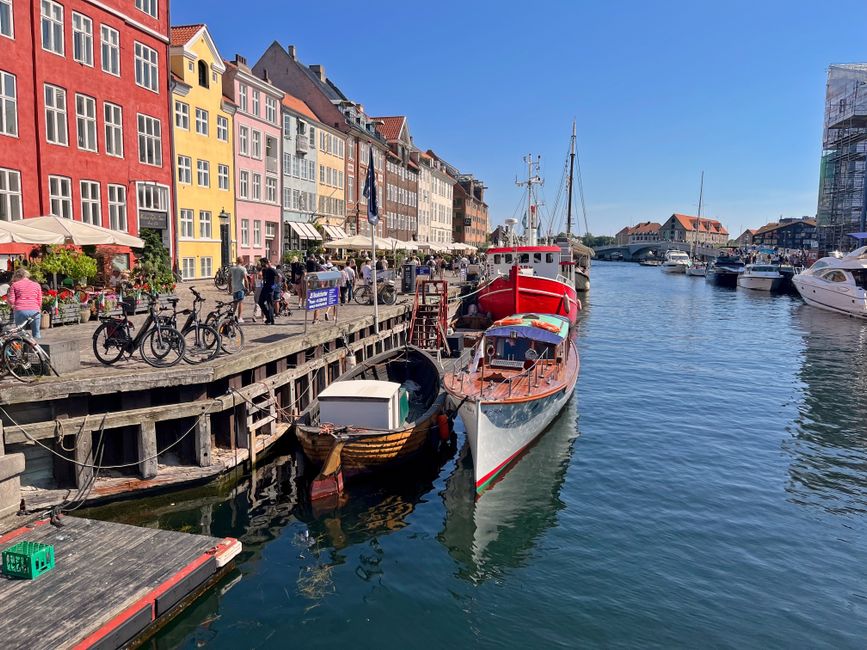
Psychological resilience — the capacity to absorb stress and recover without lasting damage — is not a personality trait you either have or lack. That is the central finding coming out of several Nordic mental health programmes this year, and it is reshaping how Copenhagen residents approach their daily routines. The Danish Health Authority reported in its 2025 national survey that roughly one in four Danes aged 16 to 44 described their stress levels as high or very high on a recurring basis, a figure that has barely shifted since 2021 despite the country's well-funded welfare infrastructure.
The timing matters. Across Europe, post-pandemic emotional fatigue has collided with economic anxiety over housing costs, the accelerating intrusion of AI tools into the workplace, and a fractured news cycle that makes it genuinely difficult to switch off. Clinicians and researchers are pushing back against the idea that the answer is a dramatic lifestyle overhaul. The evidence increasingly points elsewhere — toward small, consistent, almost boring daily actions that quietly recalibrate the nervous system over weeks and months.
The concept draws heavily on work in neuroplasticity. A 2023 meta-analysis published in Clinical Psychology Review examined 47 randomised controlled trials and found that micro-interventions — defined as practices requiring fewer than 15 minutes a day — produced statistically significant reductions in cortisol markers after six weeks when maintained consistently. Six weeks. That is shorter than most gym membership trials and cheaper than a single session with a private therapist in Copenhagen, where rates at many Østerbro and Frederiksberg clinics run between 900 and 1,400 kroner per hour.
Psykiatrifonden, the Danish mental health foundation based on Lersø Parkallé in Copenhagen, has been running its Sind i Balance programme since 2019, training volunteers in stress-recognition techniques drawn from cognitive behavioural therapy. The foundation's free online screening tool logged more than 38,000 individual uses in Denmark during 2025 alone. Their guidance consistently lists three daily behaviours with the strongest evidence base: structured breathing (specifically extended exhales, which activate the parasympathetic nervous system), outdoor exposure of at least 20 minutes, and what psychologists call "implementation intentions" — the practice of writing down not just what you plan to do, but exactly when and where you will do it.
In Copenhagen that last point is almost effortlessly achievable. The Cisternerne gardens in Frederiksberg, the running paths along Søerne — the three connected lakes that bisect the inner city — and the harbour baths at Islands Brygge all offer free, accessible outdoor environments within cycling distance of the majority of the city's population. Research from the University of Copenhagen's Department of Public Health, published in Urban Forestry & Urban Greening in late 2024, found that residents living within 300 metres of a green space reported 18 percent lower perceived stress scores than those living further away. The infrastructure for resilience-building, in other words, already exists.
The hard part is not information. Most people in Copenhagen know exercise helps. The gap is between knowing and doing, and that is where habit architecture becomes useful. Aarhus-trained behavioural psychologist Søren Falk — who consults for Hjernesagen, the Danish Brain Society, on its workplace mental health outreach — has described the core principle publicly on several occasions: attach a new micro-habit to an existing anchor behaviour. Morning coffee becomes a five-minute breathing session. The commute along Nørrebrogade on a bicycle becomes a screen-free window. The habit doesn't need to feel profound to work.
Copenhagen's kommunale distriktspsykiatri — the municipal community psychiatry service — offers free drop-in mental health consultations at several locations across the city, including the Sundhedshus at Nørre Allé 45 in Nørrebro. For residents not yet at crisis point but feeling the slow grind of chronic stress, these services represent a practical first stop before committing to private therapy. Appointments can be requested through the regional health portal borger.dk. The waiting time for an initial consultation at most community sites is currently under three weeks — considerably shorter than the six to eight weeks typical of GP-referred specialist pathways.
Start small, stay consistent, use the city. That is the prescription. No dramatic reinvention required.
About this article
Published by The Daily Copenhagen
Spread the word
Daily brief
Free, in your inbox before 7am. Weekdays.