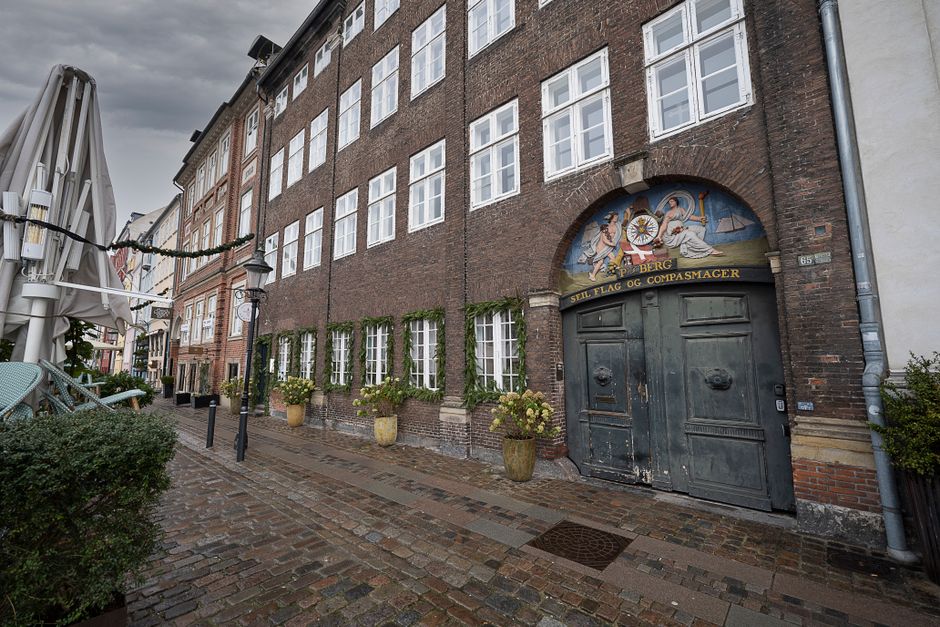
Copenhagen Municipality's Building and Planning Directorate is facing mounting pressure to overhaul a decades-old practice of storing duplicate and mismatched building images across its digital planning registries — a problem that professionals say is quietly distorting heritage assessments, slowing permit approvals and costing applicants real money.
The issue has come into sharper focus this year as the city pushes forward with its ambitious 2026 Urban Renewal Plan, which covers roughly 3,400 registered properties in inner-city districts including Vesterbro, Nørrebro and the Frederiksstaden conservation zone. Planners and architects working on renovation permits say they routinely encounter outdated or duplicated facade photographs in the city's BBR register — the Bygnings- og Boligregistret — that no longer match what is standing on the street.
Arkitektforeningen, the Danish Association of Architects, has raised the concern formally with the municipality this spring, arguing that inaccurate visual records feed directly into flawed heritage assessments. When a building's registered photograph shows a facade from 1987 rather than its current state, planning officers can make determinations based on conditions that no longer exist. For applicants along streets like Istedgade or Griffenfeldsgade, that can mean delays of weeks or, in more complex cases, months.
A Problem Built Into the System
The BBR system, administered nationally by the Danish Energy Agency but populated largely by municipal data entry, has accumulated photographic records going back to the early 1990s. Experts at the Royal Danish Academy's Architecture, Design and Conservation faculty have noted that the registry was never designed with image version control in mind. New photographs are uploaded when surveys are conducted, but old images are rarely deleted — they are simply stacked alongside newer ones, creating layers of duplicate records with no clear hierarchy.
Bygningskultur Danmark, the national organisation for building culture and heritage, has pointed out that this is not merely a technical nuisance. In conservation-sensitive areas like Frederiksstaden — where properties are subject to strict facade controls under the 2019 Local Plan 549 — a duplicate image showing an incorrect window configuration or an outdated roofline can trigger a formal heritage objection that takes the Slots- og Kulturstyrelsen, the Danish Agency for Culture and Palaces, weeks to resolve. Permit applicants in that district paid an average processing surcharge of approximately 4,200 DKK in 2025 when heritage re-inspection was required due to record discrepancies, according to figures circulating within professional planning circles, though the municipality has not published an official breakdown.
The Confederation of Danish Industry, Dansk Erhverv, has separately flagged the issue in the context of commercial property development along Østerbrogade and the Nordhavn regeneration zone, where image-related record errors have been cited in planning complaint files submitted to Planklagenævnet, the Danish Planning Appeals Board, during the first quarter of 2026.
What Comes Next
Copenhagen's Technical and Environmental Administration — Teknik- og Miljøforvaltningen — confirmed earlier this year that it is piloting an automated image deduplication tool in its internal case management platform, with a test phase covering Indre By scheduled to run through October 2026. The pilot draws on image-matching software already used by the National Museum of Denmark, Nationalmuseet, for its own digitised collections.
Professionals advising property owners say the practical guidance for now is straightforward: before submitting any planning application in a conservation zone, commission an independent building survey with dated photographs and lodge those images directly with the case officer rather than relying on whatever the BBR registry currently shows. The Frederiksberg and Copenhagen municipal planning offices both accept supplementary photographic submissions as part of the standard application package under the current administrative rules.
The municipality has indicated it will report findings from the Indre By pilot by November 2026. If the deduplication tool performs as expected, a city-wide rollout covering all 10 of Copenhagen's administrative districts could begin in the first half of 2027 — though that timetable depends on budget approval in the autumn finance negotiations.