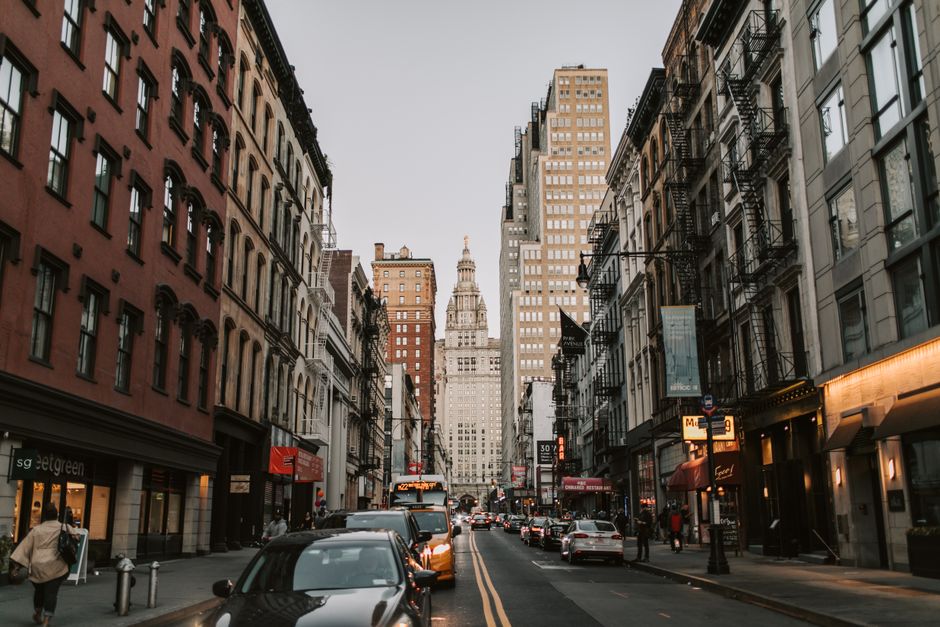
Copenhagen Municipality is sitting on a digital records backlog that affects far more residents than city hall has publicly acknowledged. Across the Teknik- og Miljøforvaltningen — the city's technical and environmental administration — duplicate image files embedded in property registers and planning case archives have accumulated over more than a decade of digitisation, creating a slow-moving bureaucratic problem that surfaces every time a homeowner in Vesterbro files a renovation permit or a housing cooperative in Nørrebro requests a heritage assessment.
The issue stems from successive waves of document scanning, first under the 2012 national digitalisation push, and again after Copenhagen migrated its planning case management system in 2019. Each migration cycle copied existing image attachments without checking whether identical files already existed in the database. The result: tens of thousands of duplicate photographs, floor plan scans, and facade images now attached to multiple case files, each requiring manual verification when staff process a new application.
What This Means on the Ground
For residents, the practical consequences are not abstract. Processing times for byggetilladelser — building permits — at the city's Borgerservice centres on Nørre Voldgade and at the Islands Brygge service point have stretched in part because caseworkers must manually cross-reference image attachments to confirm they are looking at the correct version of a property record. A standard loft conversion application in Frederiksberg, which shares planning functions with Copenhagen Municipality for certain cross-boundary properties, can sit in a verification queue for weeks longer than the statutory target of 40 working days, according to publicly available processing data on the Bygogmiljø portal.
The problem hits hardest in the city's older building stock. Neighbourhoods like Indre By, Østerbro, and the listed streets around Kartoffelrækkerne in Østerbro contain properties with records going back to multiple scanning eras. A single building can appear with four or five sets of near-identical facade photographs, each attached to different case numbers from different years. When a resident applies for permission to change a window frame or alter a shared courtyard, a caseworker must establish which image set is authoritative before any decision can proceed.
Copenhagen's municipal housing stock alone — managed partly through KAB, one of the city's largest non-profit housing administrators, which oversees roughly 68,000 homes across the greater Copenhagen area — generates thousands of planning interactions annually. Any systemic drag on image verification compounds across that volume quickly.
The Replacement Programme and What Comes Next
The municipality launched a structured duplicate-image replacement programme under its broader DataKvalitet initiative in late 2024, targeting the most congested case archives first. The programme uses automated matching to flag probable duplicates for human review, rather than deleting files outright — a safeguard against accidentally removing a unique historical record. As of the municipality's most recent published progress report from March 2026, roughly 34 percent of flagged duplicates in the pre-2018 planning archive had been resolved, leaving a substantial portion still in process.
Residents dealing with active permit applications have a practical option available now. The Bygogmiljø self-service portal, accessible through borger.dk, allows applicants to upload their own high-resolution images directly to their case file and flag them as the primary reference document. City guidance updated in January 2026 recommends this step explicitly for properties built before 1940 — a category that covers large stretches of Vesterbro, Nørrebro, and the streets immediately north of Nørreport Station.
Housing associations and andelsboligforeninger dealing with multi-unit properties should consider submitting a single consolidated image package at the point of application rather than relying on whatever the system pulls from its archive. The administrative savings, both for the association and for the municipality, are real. For individual homeowners, the message is blunter: do not assume the city's records accurately represent your property. Check the portal, upload your own documentation, and chase the case number. The database is catching up, but it is not there yet.